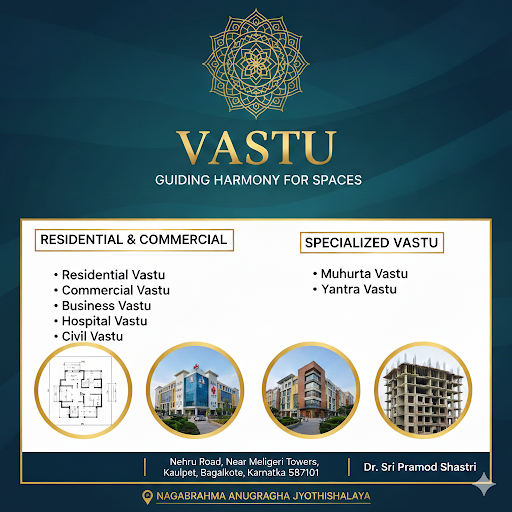
Vastu Shastra is the ancient Indian "science of architecture." It combines the five elements of n…
Vastu Shastra is the ancient Indian "science of architecture." It combines the five elements of nature (Panchabhootas) with energy fields to enhance the flow of positive energy (Prana) in a space. Core Categories of Vastu 1. Residential & Home Vastu This is the most common application, focusing on creating a harmonious living environment. It dictates the ideal placement for rooms to ensure health and prosperity. * Entrance: Ideally North, East, or Northeast. * Kitchen: The Southeast corner (the zone of Fire). * Master Bedroom: The Southwest corner (the zone of Earth/Stability). 2. Commercial & Business Vastu Designed to increase cash flow, productivity, and customer retention. * Office/Business: Focuses on the seating direction of the owner (facing North or East) and the placement of the accounts department. * Hospital Vastu: Prioritizes the placement of the OT (Operation Theatre) and patient rooms to facilitate quick healing. * Factory Vastu: Concentrates on heavy machinery placement (Southwest) and the flow of raw materials to finished goods. 3. Civil Vastu This involves the technical integration of Vastu principles during the actual construction and structural engineering phase. It ensures that the "bones" of the building—the pillars, beams, and foundation—do not create "Vastu Doshas" (defects). Specialized Vastu Practices Muhurta Vastu Vastu isn't just about where you build, but when you start.